Transforming Homes with Innovation
In an era where environmental awareness converges with technological advancement, homes in Thailand are undergoing a complete transformation. This article explores the three core pillars defining the "Future of Residential Living" with sustainable and smart homes, aiming to elevate quality of life and preserve the planet for future generations.
1. Smart Home Technology: The Core of Integration
Integrated smart home systems are not just about standalone gadgets; they form an ecosystem that connects and controls everything within the home through a single application. The crucial component is the use of AI (Artificial Intelligence) to learn inhabitants' behaviors and automatically adjust settings, such as natural lighting, climate control, and advanced security systems that can notify and respond to threats in real-time. This innovation offers not only convenience but also efficient energy management.
2. Sustainable Energy Management: Saving for the Future
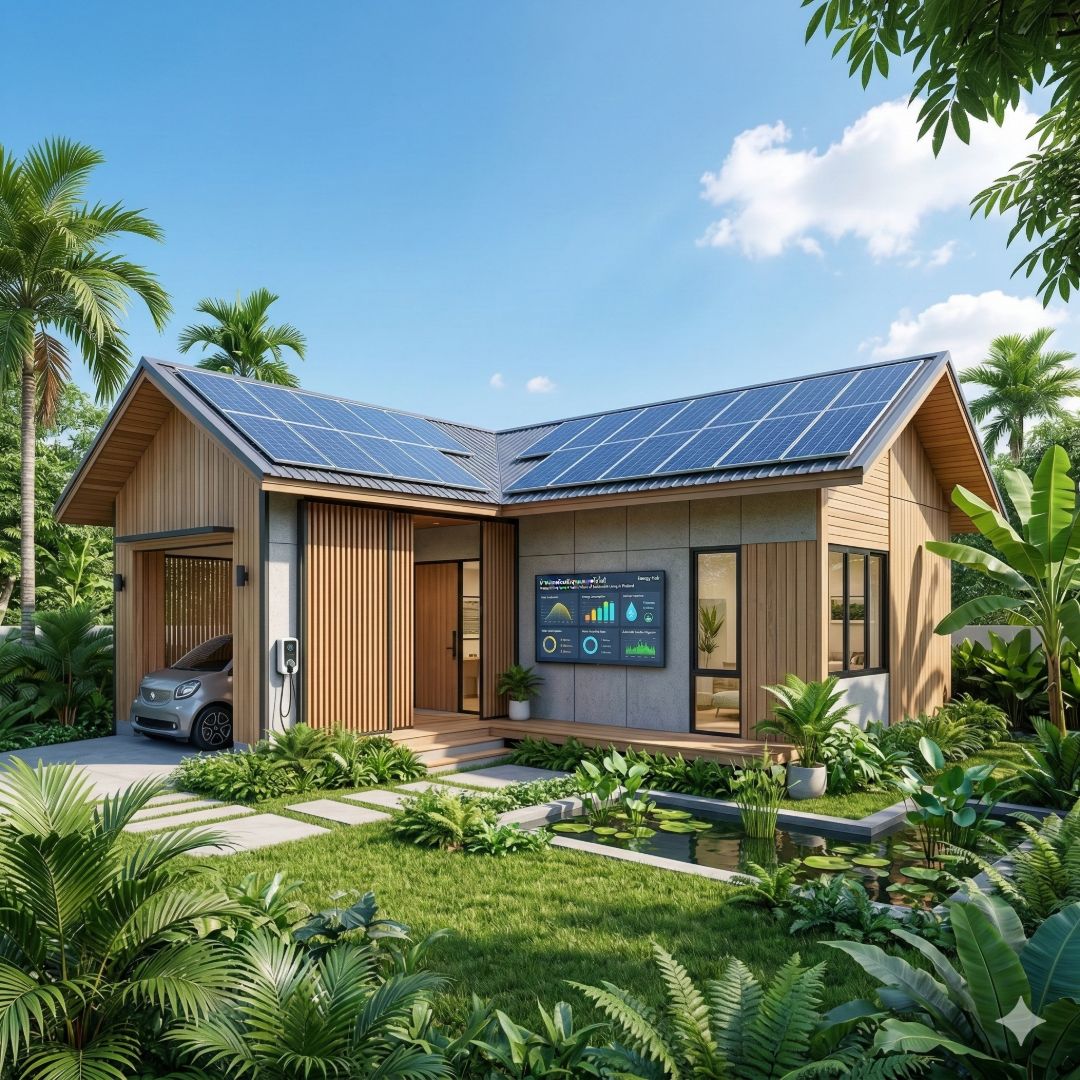
Sustainable energy management is the backbone of cost reduction and environmental impact. Trending technologies in Thailand include the installation of solar panels paired with battery storage systems, allowing homes to produce and consume their own energy, decreasing reliance on the central power grid. Additionally, passive design, which emphasizes natural light and ventilation, and the use of eco-friendly materials, such as insulated glass and sustainable roof insulation, are becoming essential.
3. Wellness Innovation: Health is Wealth
In the age of PM2.5 pollution, homes must act as "health shields." Popular wellness innovations include whole-house air filtration systems, fresh air supply installations, and allergen reduction technologies, alongside designs that promote well-being, such as the use of Low-VOC (Volatile Organic Compounds) paints and materials, and contactless hygiene features in bathrooms.
Conclusion: A Worthy Investment
Sustainable and smart homes are not a luxury; they are a worthy long-term investment, offering convenience, health, and environmental responsibility. Integrating these innovations increases property value and creates a sustainable future for residential living in Thailand.